Coastal House Colors for the Exterior: Beach-Ready Palettes
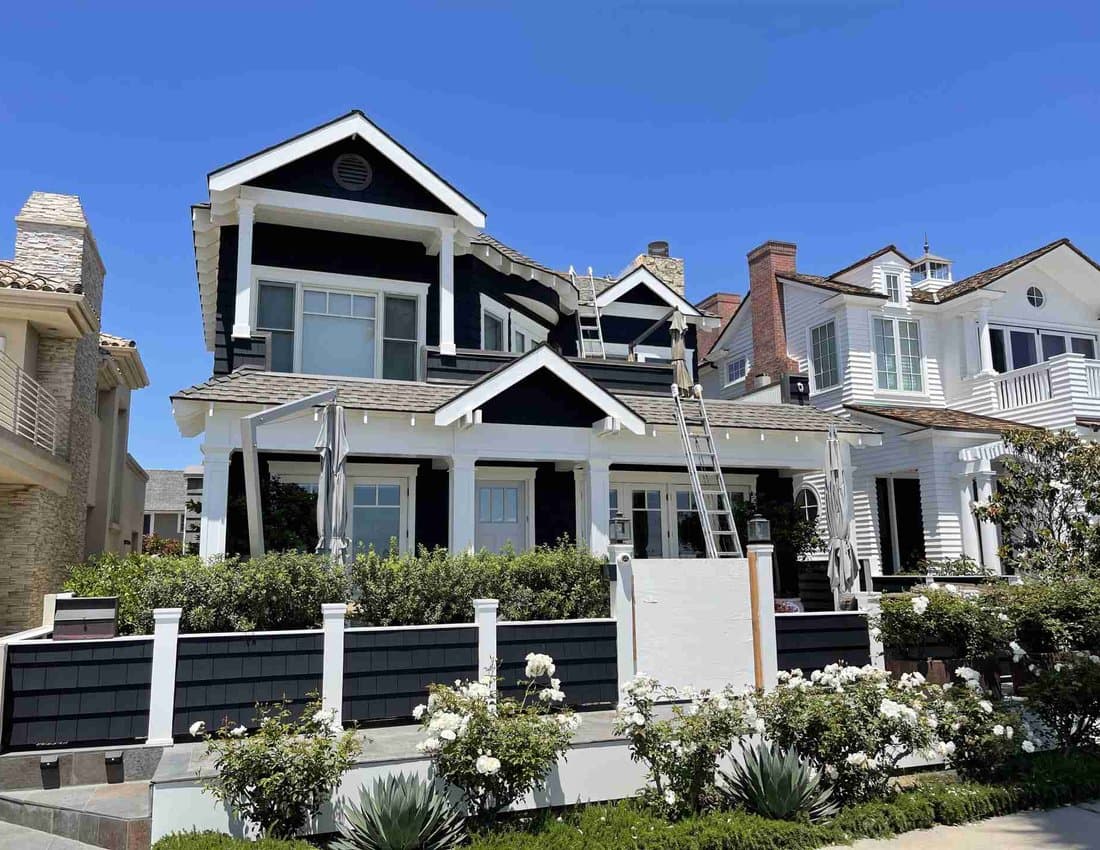
The best coastal house colors for the exterior look relaxed on a sunny afternoon and still look clean after years of salt air and sun. That second part is where most beach palettes fall down: a blue that looks perfect on a swatch can turn chalky on an ocean-facing wall long before the rest of the house needs paint.
This guide gives you real, named beach house colors for the exterior from Sherwin-Williams and Benjamin Moore, each with its light reflectance value (LRV) from the brand's own color data. You'll also get five ready-made combinations, the reason some colors fade faster than others, and how the palette changes from a stucco home in Oceanside to a shingled cottage in Coronado. It's the same approach the Lifetime Custom Painting team uses when we sample exteriors along the San Diego coast.
Quick answer: The safest coastal house colors for an exterior are light, slightly warm whites (Sherwin-Williams Pure White, Benjamin Moore White Dove), soft blue-greens (Sea Salt, Palladian Blue) and sandy neutrals (Accessible Beige, Manchester Tan), with navy or charcoal kept to doors and shutters. Light colors with an LRV above about 55 stay cooler and hide fading; deep blues and greens look striking but fade fastest in direct sun.
Key Takeaways
- Choose a body color with an LRV of roughly 55 or higher for walls that take full sun or face the ocean.
- Sherwin-Williams' own guidance says organic blues and greens fade faster than earth-toned iron-oxide colors.
- Save the deep blues (Naval, Hale Navy) for doors, shutters and shaded trim, where they are easy to refresh.
- Sherwin-Williams advises washing salt deposits off a surface before it is painted.
- Test samples on the actual wall in morning marine-layer light and in full afternoon sun before you commit.
What Are the Best Coastal House Colors for the Exterior?
The best coastal exterior colors are light, slightly muted shades borrowed from sand, sea glass, driftwood and sky. They read as fresh in bright sun, they don't glare, and they hide salt film and fading better than saturated colors.
Here are shades we'd shortlist, grouped by role. Every LRV below comes from the manufacturer's own color page (higher number = lighter and cooler on the wall).
| Role | Color | Brand & code | LRV |
|---|---|---|---|
| Warm white body/trim | Pure White | Sherwin-Williams SW 7005 | 84 |
| Crisp white trim | Extra White | Sherwin-Williams SW 7006 | 86 |
| Soft white body | White Dove | Benjamin Moore OC-17 | 83 |
| Bright trim | Chantilly Lace | Benjamin Moore OC-65 | 90 |
| Sea-glass body | Sea Salt | Sherwin-Williams SW 6204 | 63 |
| Pale blue-green body | Palladian Blue | Benjamin Moore HC-144 | 60 |
| Misty blue body | Topsail | Sherwin-Williams SW 6217 | 75 |
| Sandy neutral body | Accessible Beige | Sherwin-Williams SW 7036 | 58 |
| Warm sand body | Manchester Tan | Benjamin Moore HC-81 | 63 |
| Driftwood greige body | Revere Pewter | Benjamin Moore HC-172 | 55 |
| Navy accent | Hale Navy | Benjamin Moore HC-154 | 8 |
| Navy accent | Naval | Sherwin-Williams SW 6244 | 4 |
Sherwin-Williams describes Sea Salt as a cool, muted green with blue undertones, which is why it reads as "beach" without looking like a nursery. Benjamin Moore pitches Hale Navy as a navy with a classic maritime feel, and it is a natural door color to pair with a white body.
One caution before you fall for a swatch online: not every color in a brand's fan deck is offered for exterior use. Sherwin-Williams' own data lists Coral Reef (SW 6606), a color some beach-house roundups suggest for front doors, as interior-only. Check the color page or ask your painter before you plan a scheme around it.
Why Do Beach House Colors Fade Faster on the Coast?
Coastal homes take a double hit: strong ultraviolet light breaks down pigment and binder, and salt-laden air leaves deposits on the walls that need to be washed off before any repaint. Color choice controls how visible that wear is.
Sherwin-Williams states plainly in its exterior product selection FAQ that organic colors such as blues and greens "will tend to fade more quickly" than inorganic colors made with brown and yellow iron oxides. The same guidance notes that high-quality acrylic latex house paints hold their color better than lower-cost paints, and that salt deposits should be washed off before a surface is painted.
What that means for your palette:
- Blues and greens: keep them light (the lighter the tint, the less fading shows) or keep them on small, easy-to-repaint areas.
- Sandy and earth tones: beiges, tans and greiges built on iron-oxide pigments are the most forgiving body colors near the water.
- Darks: an LRV under about 15 absorbs far more heat and light. On a sunny west wall, that means faster fading and more stress on caulk and trim joints.
- Whites: they hide fading, but pure, cold whites can glare in San Diego sun. A white with a hint of warmth (Pure White, White Dove) softens that.
Paint quality matters as much as color. A premium 100% acrylic exterior line, applied over clean, sound and properly primed surfaces, is what lets any of these colors last. That's the standard our exterior painting team in San Diego works to, and it is why exteriors we repaint are prepped to last 5–10 years.
Five Beach House Exterior Color Combinations That Work
A good coastal scheme is three colors: a body, a trim and an accent for the door or shutters. These five combinations use only shades listed above.
- Classic white and navy: Pure White body and trim, Hale Navy front door and shutters. Timeless, forgiving and easy to touch up.
- Sea glass: Sea Salt body, Extra White trim, Urbane Bronze (SW 7048, LRV 8) door. Soft color with a grounded, modern accent.
- Sand and surf: Accessible Beige body, Chantilly Lace trim, Palladian Blue door. Warm, relaxed and very low-maintenance near the water.
- Driftwood cottage: Revere Pewter body, White Dove trim, Kendall Charcoal (HC-166, LRV 15) door. Reads gray-beige in fog and warm in sun.
- Bright beach bungalow: Topsail body, Pure White trim, Naval door. A light blue that stays airy, with the deep color kept small.
Notice the pattern: the large surfaces stay light and the dark color lives on the door. That one decision does more for a coastal paint job's lifespan than anything else you can choose.
How Do Coastal Colors Change Across San Diego Beach Towns?
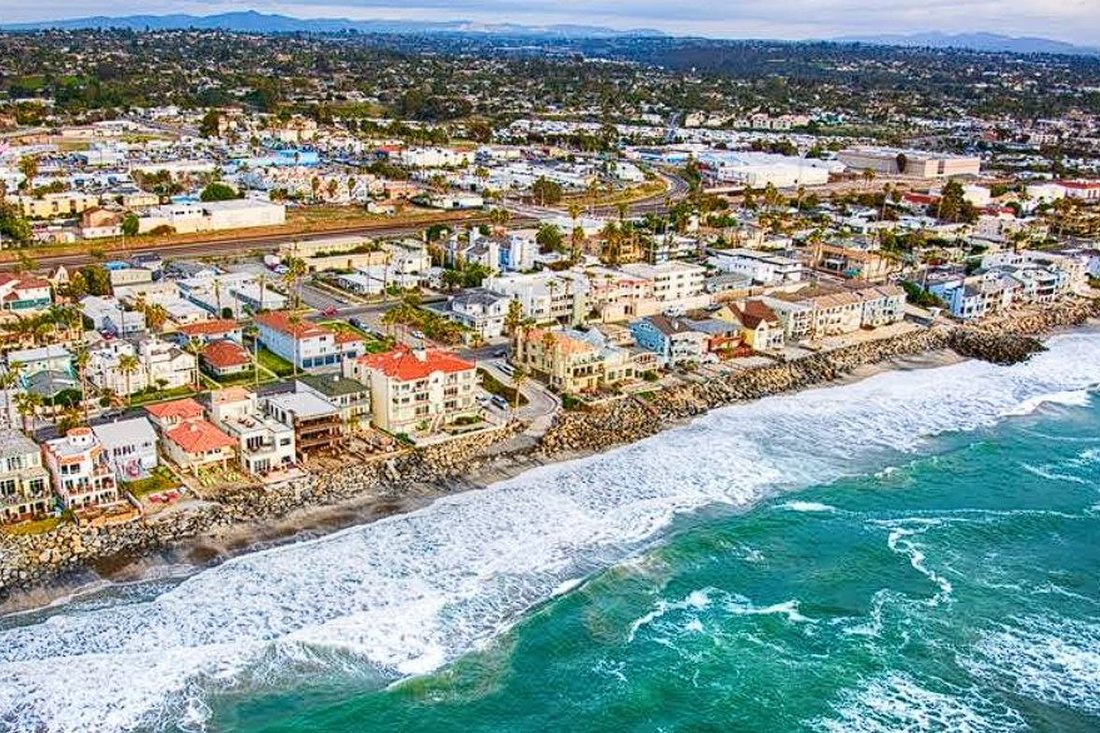
The right exterior house colors for a coastal home depend on its architecture and how close it sits to the water. San Diego's beach towns mix several styles, and each suits a different version of the palette.
- Spanish and Mediterranean stucco (Oceanside, Carlsbad, Encinitas): warm whites and sandy neutrals look right against terracotta roofs. Alabaster (SW 7008) or Shoji White (SW 7042) with dark bronze or black ironwork accents is hard to beat. For more stucco-specific shades, see our guide to the best stucco paint colors.
- Cape Cod and shingle-style cottages (Coronado, Del Mar): this is where the white-and-navy or gray-and-white schemes feel most at home. Edgecomb Gray (HC-173) body with White Dove trim is a quiet, classic choice.
- Beach bungalows and mid-century homes (Pacific Beach, Ocean Beach, La Jolla Shores): this is the place for a light blue or sea-glass body, as long as the deep color is kept to the door.
- Bluff-top and oceanfront homes: stick to the lightest end of the palette (LRV 60+) on the ocean-facing walls. They take the most sun, wind and salt spray.
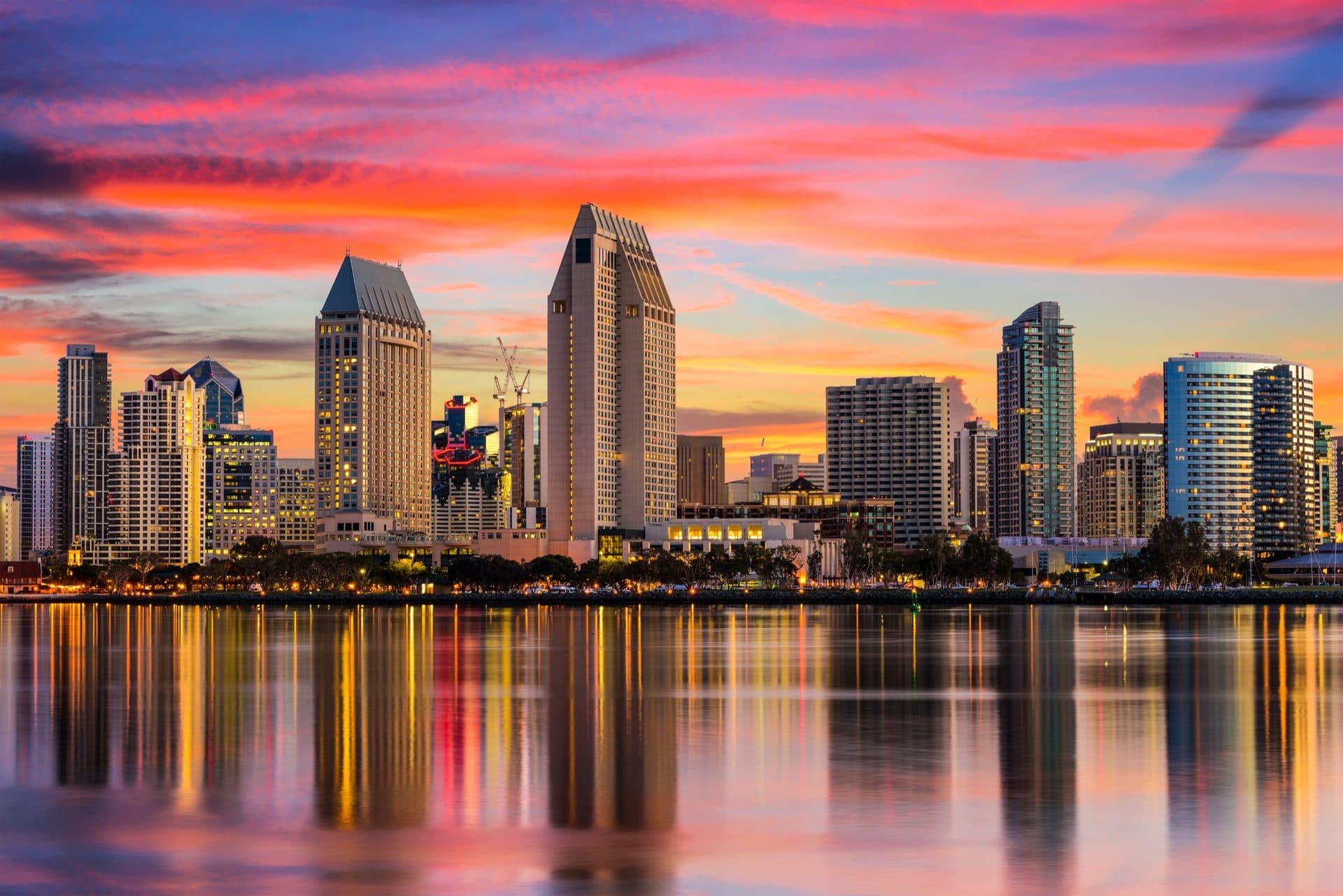
Two local conditions are worth testing for. The coast spends many late-spring mornings under the marine layer that NOAA notes Southern Californians call "May Gray" or "June Gloom", so a gray-blue can look almost colorless at 9 a.m. and bright by 3 p.m. And many coastal neighborhoods have HOAs or design review, so get your shortlist approved before anyone opens a can. If budget is part of the decision, our guide to what it costs to paint a stucco house in San Diego breaks down the numbers.
How Should You Test Exterior House Colors for a Beach House?
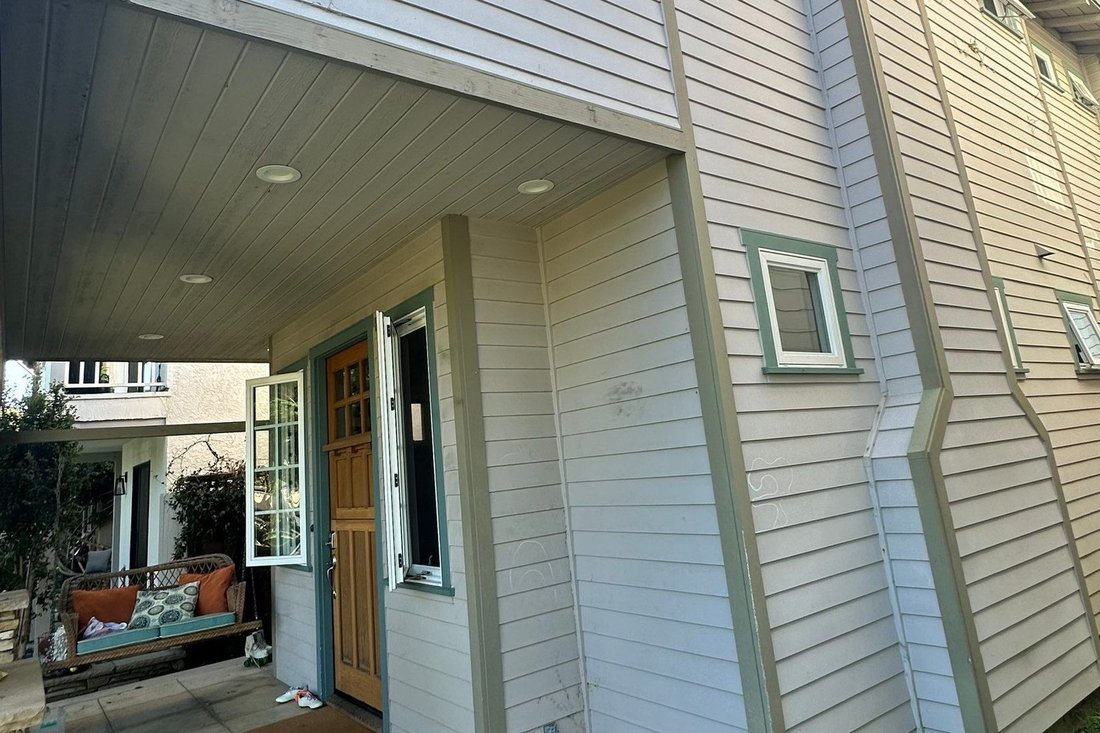
Test on the house itself, in large samples, at different times of day. A two-inch chip under store lighting tells you almost nothing about how a color reads on a sunlit wall 100 feet from the ocean.
- Paint sample boards at least 2 feet square, or apply samples directly to the wall on the sunniest and the shadiest side.
- Look at them in morning overcast, at midday and at sunset, over at least two days.
- Check the body sample next to your roof, windows and any stone or brick, because those don't change.
- Compare the trim and body together; white trim looks different beside a sea-glass green than beside a beige.
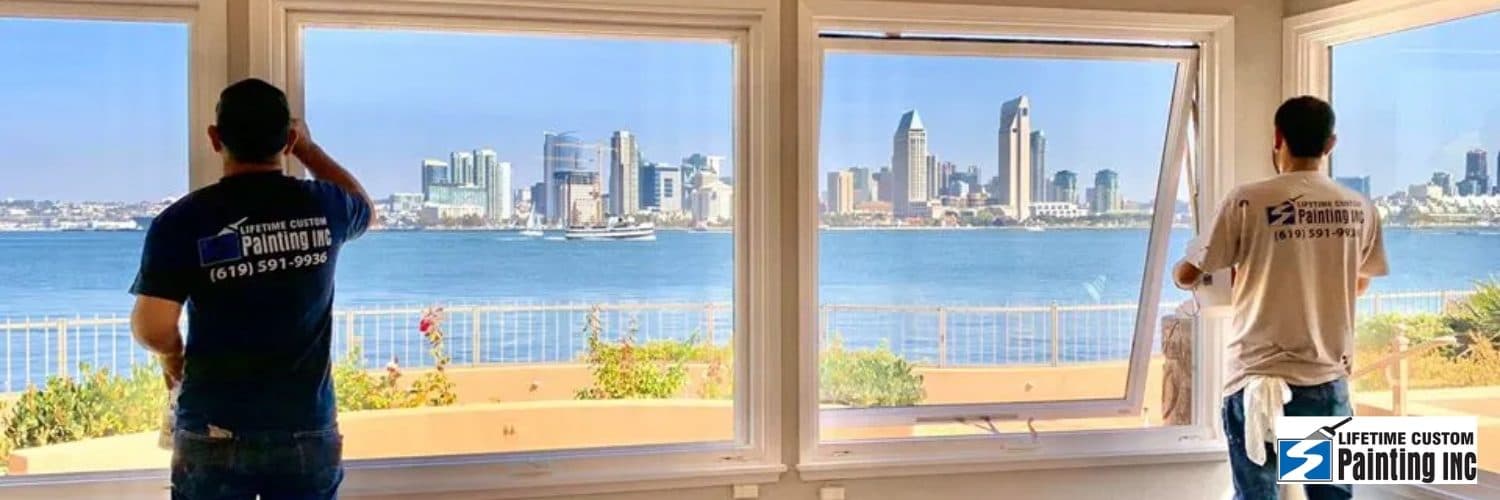
If you've narrowed it to two or three whites and still can't decide, that's normal. Lifetime offers a free color consultation, and seeing samples on your own wall usually settles it quickly. Our recent Coronado exterior painting project shows a light, crisp palette on a coastal home.
How Do You Keep a Coastal Exterior Looking Fresh?
Keep salt and grime off the paint, fix small failures early, and refresh accent colors before they fade badly. Coastal paint doesn't fail all at once; it wears at the edges first.
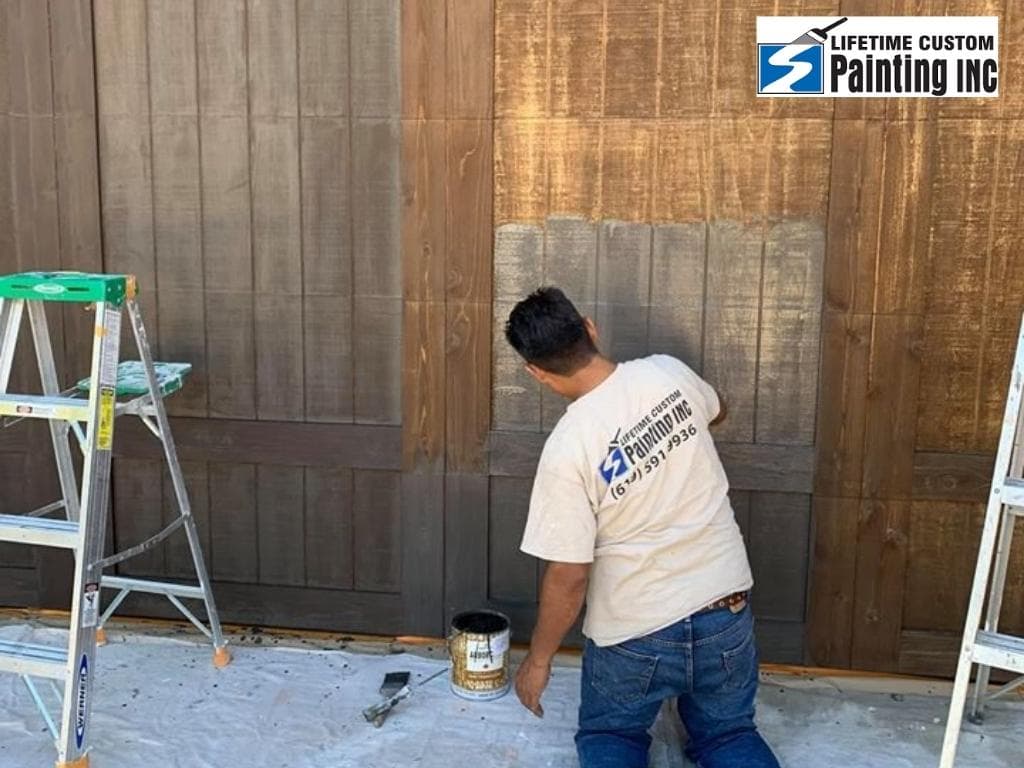
- Rinse the house: a gentle wash once or twice a year removes salt film. Professional power washing before any repaint is essential, because Sherwin-Williams advises washing salt deposits off a surface before it is painted.
- Watch the south and west walls: these take the most sun and show chalking and fading first.
- Re-caulk joints and touch up trim: open joints let moist, salty air in behind the paint.
- Refresh the door: a navy or charcoal door may need a new coat sooner than the body, which is one more reason to keep dark colors small.
Lifetime Custom Painting, a licensed San Diego painting contractor (CSLB #1002304), uses Sherwin-Williams and Benjamin Moore exterior lines and handles the washing, prep and repairs to the paint surface as part of every exterior job.
Frequently Asked Questions
What is the most popular coastal exterior house color?
White with a navy or charcoal accent is the most common coastal scheme because it suits almost every architectural style and hides fading well. Warm whites such as Sherwin-Williams Pure White or Benjamin Moore White Dove look softer in strong sun than stark, cool whites.
Do dark colors work on a beach house?
They can, but they fade and heat up faster in full sun, especially deep blues and greens. Most coastal homes look and last best with a light body color and the dark shade kept to the door, shutters or shaded trim.
What sheen is best for a coastal exterior?
Satin or low-sheen finishes are a good balance for siding and stucco because they shed dirt and salt better than flat paint without showing every surface flaw. Trim and doors usually get a satin or semi-gloss finish so they can be wiped clean.
How often should a coastal house be repainted?
It depends on exposure, color and how well the surface was prepped. Ocean-facing walls and dark accents wear first, so expect to touch those up sooner than the rest of the house, and rinse salt off once or twice a year to stretch the repaint cycle.
Is Sea Salt a good exterior color?
Yes. Sherwin-Williams Sea Salt (SW 6204) is rated for exterior use and has an LRV of about 63, so it stays light and cool on a sunny wall. It pairs well with a crisp white trim and a dark bronze or navy door.
Get a Coastal Palette Tested on Your Own Walls
The quickest way to choose coastal house colors for your exterior is to see two or three finalists on your actual walls, in your actual light. Start with a light body color, a white trim and one deep accent, then let the samples decide.
If you'd like help narrowing it down, Lifetime Custom Painting offers a free color consultation alongside a free estimate, and we'll write up a fixed quote for prep and paint. Call (619) 591-9936 to book a visit.
Thinking about a project in San Diego?
Luis Rodriguez and the team give free, fixed written estimates — no pressure, no obligation.
- Licensed & insured
- 4.9★ · 291+ reviews
- 10% military discount