Mid-Century Modern Exterior Paint Colors for San Diego Homes
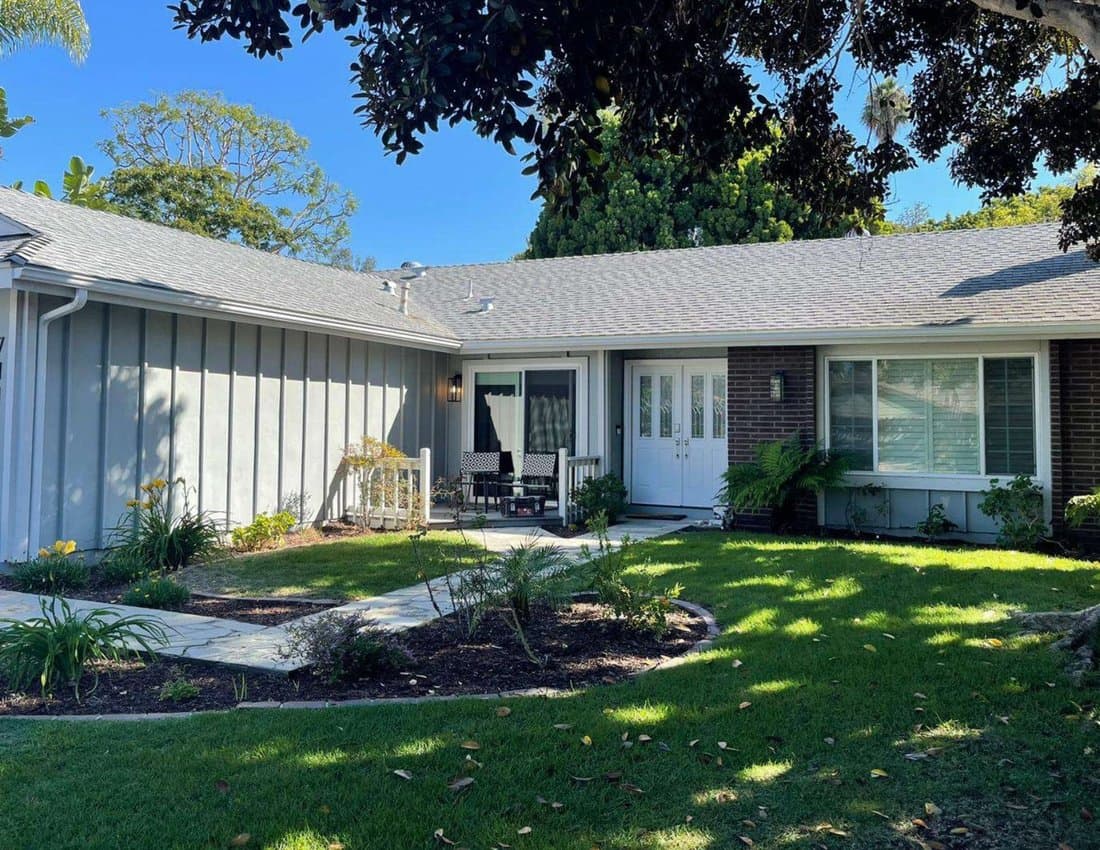
Mid-century modern house colors for the exterior follow a simple formula: an earthy, grounded body, quieter trim and one confident pop of color, usually on the front door. Get that balance right and a 1950s or 1960s home looks sharp and intentional; get it wrong and the clean lines that make the style special disappear.
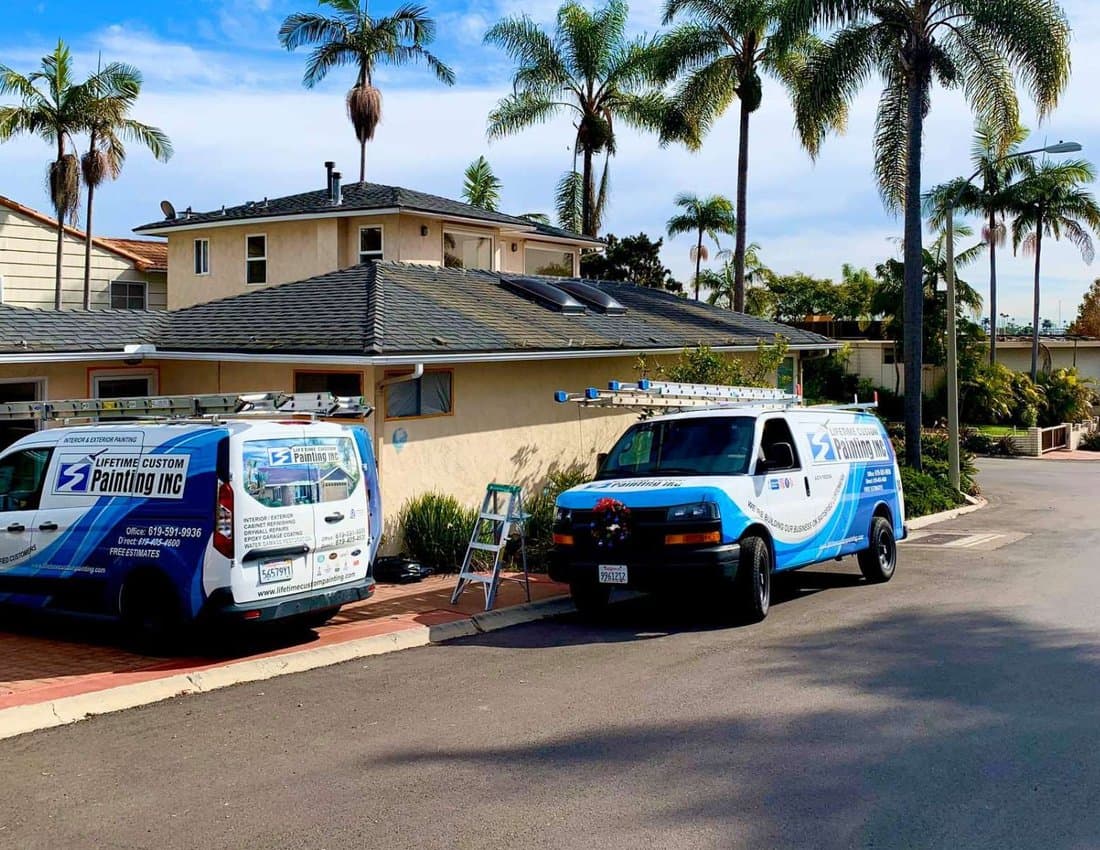
This guide covers the best mid century modern paint colors for exteriors from Sherwin-Williams and Benjamin Moore, with each shade's light reflectance value (LRV), where each color belongs on the house, and five ready-made palettes. Because San Diego has whole neighborhoods of post-war ranch and contemporary homes, we've also covered how the formula changes from a Clairemont tract ranch to a post-and-beam house near the coast. It's the approach the Lifetime Custom Painting crew takes when we repaint mid-century homes across San Diego.
Quick answer: The most authentic mid-century modern exterior colors are earthy darks and warm neutrals for the body (Sherwin-Williams Urbane Bronze, Status Bronze, Wool Skein or Benjamin Moore Gray Owl), white or off-white for beams and fascia, and one saturated accent such as turquoise, mustard, avocado or terracotta on the front door. Keep the trim quiet so the roofline and windows do the talking.
Key Takeaways
- Mid-century exteriors use a body, a lighter eave/beam color and a single bright accent, not a busy multi-color scheme.
- Earth tones (browns, olive, warm gray, sand) are the historic backbone; turquoise, orange and mustard are the accents.
- Dark body colors (LRV under 15) look authentic but absorb more heat, so plan for sun exposure on south and west walls.
- San Diego's post-war neighborhoods, from Clairemont to Del Cerro, are full of tract ranch and contemporary homes that suit this formula.
- If your home is a designated historic resource, check the City's requirements before changing exterior colors.
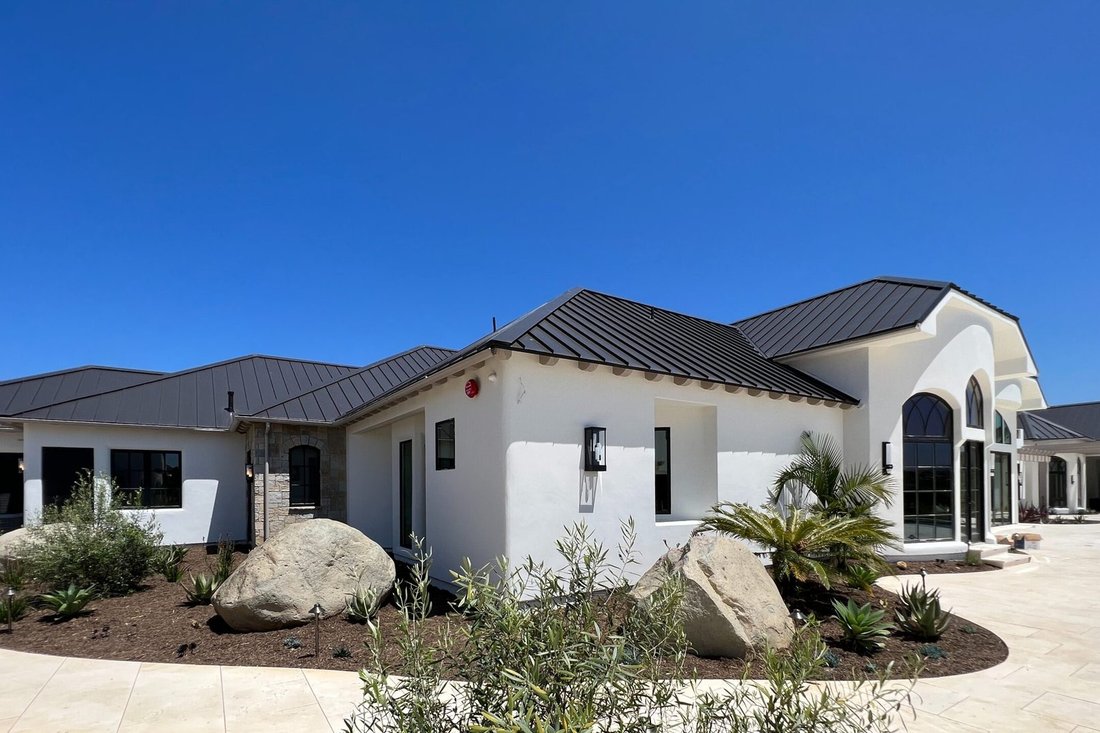
What Are the Best Mid-Century Modern House Colors for the Exterior?
The best mid-century exterior colors are nature-inspired neutrals for the main walls with one bright, clear accent. Sherwin-Williams says the modern-style exterior palettes on its site use "bright, clear colors with neutral accents" for sleek, contemporary and mid-century modern homes.
Here's a shortlist sorted by role. LRVs come from each manufacturer's own color data (lower = darker).
| Role | Color | Brand & code | LRV |
|---|---|---|---|
| Dark earthy body | Urbane Bronze | Sherwin-Williams SW 7048 | 8 |
| Dark earthy body | Status Bronze | Sherwin-Williams SW 7034 | 8 |
| Charcoal body | Iron Ore | Sherwin-Williams SW 7069 | 6 |
| Blue-green gray body | Homburg Gray | Sherwin-Williams SW 7622 | 15 |
| Mid-tone body | Artisan Tan | Sherwin-Williams SW 7540 | 33 |
| Light warm body | Wool Skein | Sherwin-Williams SW 6148 | 63 |
| Light cool body | Gray Owl | Benjamin Moore OC-52 | 65 |
| Eaves, beams, fascia | Shoji White | Sherwin-Williams SW 7042 | 74 |
| Turquoise accent | Holiday Turquoise | Sherwin-Williams SW 0075 | 49 |
| Mustard accent | Olde World Gold | Sherwin-Williams SW 7700 | 17 |
| Avocado accent | Bamboo Shoot | Sherwin-Williams SW 7733 | 38 |
| Terracotta accent | Rookwood Terra Cotta | Sherwin-Williams SW 2803 | 14 |
| Brick-red accent | Boston Brick | Benjamin Moore 2092-30 | 12 |
| Deep green accent | Peale Green | Benjamin Moore HC-121 | 14 |
Holiday Turquoise comes from Sherwin-Williams' historic color collection and is rated for exterior use. It's the kind of saturated, optimistic shade that defined 1950s accents, and it looks best on a single door or a garage panel, not across a whole wall.
Where Should Each Color Go on a Mid-Century Home?
Use one color per architectural element and repeat it consistently: body, eaves and beams, then one accent. Mid-century homes are defined by long horizontal lines, deep overhangs and big windows, and paint should emphasize those, not compete with them.
- Body (walls, siding, stucco): the earthy main color. Dark bodies make the house sit low in its landscape; lighter sand and greige bodies feel airier.
- Eaves and soffits: usually a medium or light tone so the overhang reads as a crisp shadow line.
- Beams and fascia: white or off-white to outline the roofline, or the body color if you want a quieter, monolithic look.
- Window frames and trim: keep them simple. Many designers match trim to the body so the windows don't look busy.
- Natural wood siding, beams or soffits: if the original stained wood is still sound, restaining keeps the grain many post-and-beam homes were designed to show. Paint is the better choice once the wood is too weathered to take stain evenly.
- Front door (and sometimes one feature wall or the garage door): your single bright accent.
- Foundation band or planter walls: a dark charcoal such as Iron Ore can ground the house visually.
The common mistake we see is outlining every board and window in contrasting trim. That's a Victorian or Craftsman habit, and on a ranch or contemporary house it breaks up the clean lines that make the style work. For older, more ornate homes, our historic and Craftsman painting service takes the opposite approach.
Five Mid-Century Modern Exterior Paint Color Palettes
Each palette below uses three or four of the colors above. Sample them together, because body, beam and accent colors change each other on the wall.
- Classic dark earth: Urbane Bronze body, Shoji White beams and fascia, Holiday Turquoise front door. The look most people picture for a post-and-beam home.
- Desert modern: Artisan Tan body, Shoji White fascia, Rookwood Terra Cotta door, Iron Ore foundation band. Warm and natural against drought-tolerant landscaping.
- Light and breezy: Wool Skein body, Status Bronze trim and beams, Olde World Gold door. A lighter scheme for homes that take full afternoon sun.
- Cool slate: Homburg Gray body, Gray Owl eaves, Boston Brick door. Calm and slightly blue-green, and it pairs well with brick or stone chimneys.
- Garden green: Peale Green body on a shaded or tree-covered lot, Shoji White beams, Bamboo Shoot or mustard door. Earthy and very period-correct.
If your home is more traditional than modern, our guide to elegant exterior styles and colors may suit it better.
Which San Diego Neighborhoods Have Mid-Century Modern Homes?
San Diego has a large stock of post-war homes. According to the City of San Diego's Modernism Historic Context Statement, the Tract Ranch was the dominant single-family house type here from the mid-1950s through the 1970s.
The City's study names the tract builders and the communities they built in, including:
- Clairemont: described as second in size only to Long Island's Levittown, a master-planned series of neighborhoods with curving streets, schools, parks and shopping centers.
- Allied Gardens, Del Cerro and San Carlos: post-war tracts by builders such as Bollenbacher-Kelton (Allied Gardens), Drogin Construction and Jackson-Scott (Del Cerro) and Tavares Development (San Carlos).
- Rolando, College Area and University City: more tract ranch and contemporary neighborhoods listed in the same study.
- Coastal modernism: the report notes that architects Palmer and Krisel produced tracts "from the beach to Del Cerro", and highlights J. Herbert Brownell's narrow "Compact Houses" in Pacific Beach, William Kesling's work in La Jolla and Ocean Beach, and the 1959 post-and-beam Case Study Triad houses in La Jolla.
The same report separates mid-century homes into sub-styles, and the paint approach differs a little for each:
- Tract Ranch: often stucco or horizontal wood siding with shutters and a brick chimney. Warm neutrals and a muted accent suit them; the brick stays unpainted.
- Contemporary: strong flat, shed or butterfly rooflines, aluminum windows and mixed materials. This is where the bolder accent door works best.
- Post and Beam: exposed structure and walls of glass. Darker, quieter body colors let the structure and glass stand out.
If your home is a designated historic resource or sits in a historic district, exterior changes can need review. Check with the City of San Diego's historic preservation staff before choosing a new scheme.
Do Dark Mid-Century Colors Work in San Diego's Sun?
Yes, but site them carefully. Dark body colors were part of the original mid-century look, yet a color with an LRV under about 15 absorbs far more sunlight and heat than a light one, so it fades sooner and puts more stress on caulked joints and wood trim.
- Use darks where there's shade: deep overhangs, mature trees and north-facing walls handle Urbane Bronze or Iron Ore well.
- Go lighter inland and on exposed walls: homes in hotter inland areas, or with long, unshaded south and west walls, often look and last better in Wool Skein, Gray Owl or Artisan Tan.
- Keep accent colors on small areas: Sherwin-Williams' exterior product FAQ notes that organic colors such as blues and greens fade faster than earth-toned iron-oxide colors, so a turquoise or avocado accent belongs on a door you can repaint in an afternoon.
- Use a premium exterior line: quality acrylic exterior paint and proper surface prep matter more than color for how long the finish lasts.
Lifetime Custom Painting, a licensed San Diego painting contractor (CSLB #1002304), uses Sherwin-Williams and Benjamin Moore exterior paints and preps every exterior painting job, including stucco and wood siding, so the finish is prepped to last 5–10 years.
Frequently Asked Questions
What colors are typical of mid-century modern exteriors?
Earthy browns, warm grays, olive and sand tones for the body, with white or off-white beams and fascia. A single bright accent, often turquoise, orange, mustard or avocado, usually goes on the front door.
What color front door suits a mid-century modern house?
A saturated, clear color that contrasts with the body works best, such as turquoise, mustard yellow, orange or terracotta. Choose one accent and use it only on the door, or on the door and one small feature.
Should mid-century trim be a contrasting color?
Usually not. Mid-century homes look cleanest when window trim matches the body and only the beams, fascia or eaves change color, which keeps the long horizontal lines intact.
What paint finish is best for a mid-century exterior?
Flat or low-sheen finishes suit stucco and siding because they hide surface texture, while satin or semi-gloss is better on doors and trim that get handled. Avoid high gloss on large wall areas.
Can a mid-century home be painted white?
Yes, especially a contemporary or stucco home with a strong roofline. A warm white body with a dark roof or fascia and a bright door is a cleaner, more modern take on the style.
See Your Mid-Century Palette on the House First
The fastest way to choose mid-century modern house colors for your exterior is to put large samples of one body color, one beam color and one accent side by side on the house itself, then view them in morning and afternoon light.
If you'd like a second pair of eyes, Lifetime Custom Painting offers a free color consultation and a fixed, written quote for the full exterior. Book a free estimate or call (619) 591-9936.
Thinking about a project in San Diego?
Luis Rodriguez and the team give free, fixed written estimates — no pressure, no obligation.
- Licensed & insured
- 4.9★ · 291+ reviews
- 10% military discount