How to Prep for Painting Kitchen Cabinets: Homeowner Guide
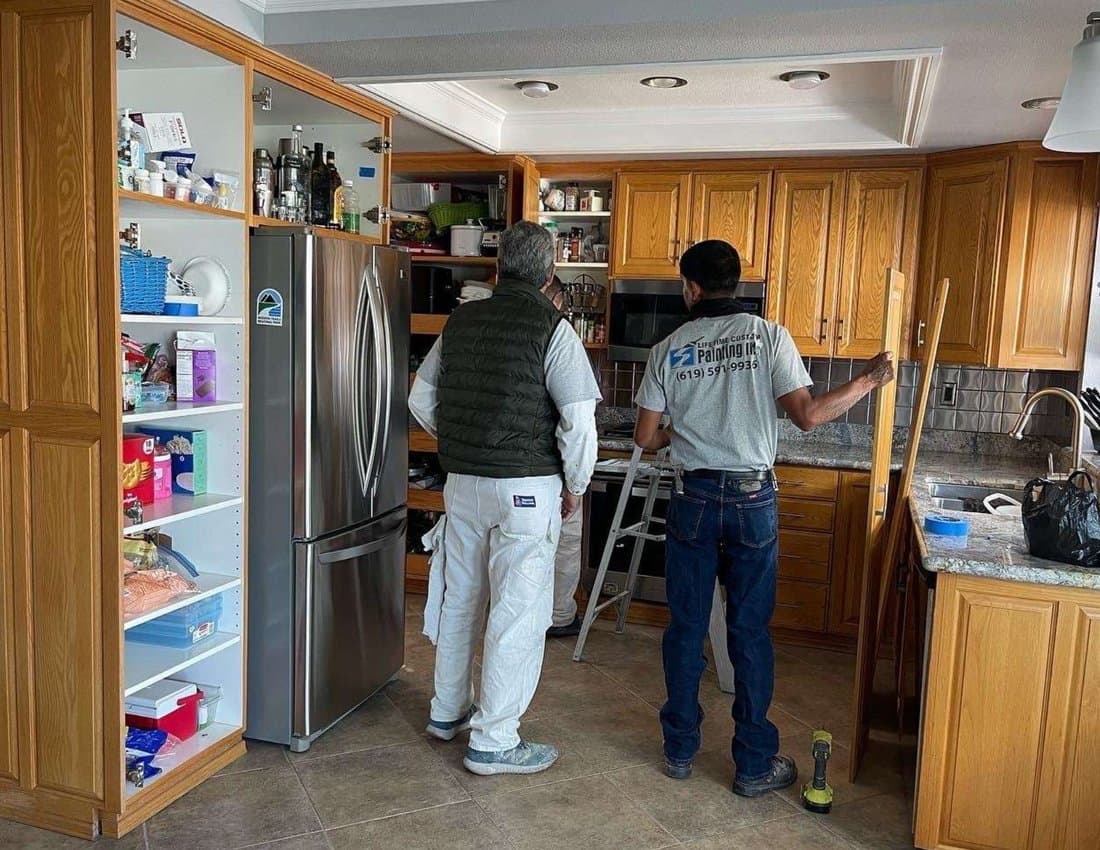
Knowing how to prep for painting kitchen cabinets saves you money and gets the crew spraying sooner. Most of it is simple: empty, clear, clean and plan around a few days without doors. The cabinet painting prep that decides whether the finish lasts, the degreasing, sanding and priming, is the painter's job. Yours is getting the kitchen ready so they can start on day one. Here is the checklist we give homeowners at Lifetime Custom Painting before a San Diego kitchen project, plus what to expect while the work is underway.
Quick answer: Before cabinet painters arrive, empty every cabinet and drawer, clear the countertops and the tops of the cabinets, give the kitchen a basic wipe-down, and plan for three to five days of limited kitchen use. Leave hardware removal, degreasing, sanding and priming to the crew unless they ask otherwise, and confirm colors and sheen before the start date.
Key Takeaways
- Empty cabinets, drawers, counters and cabinet tops the day before the crew arrives.
- A basic soap-and-water clean helps, but professionals still degrease and sand every surface.
- Skip furniture polish, wax and oil soaps in the weeks before painting; they can interfere with adhesion.
- Plan simple meals and a temporary dish station for a few days.
- Fresh cabinet enamel needs about a week before heavy use and can take up to 30 days to fully harden.
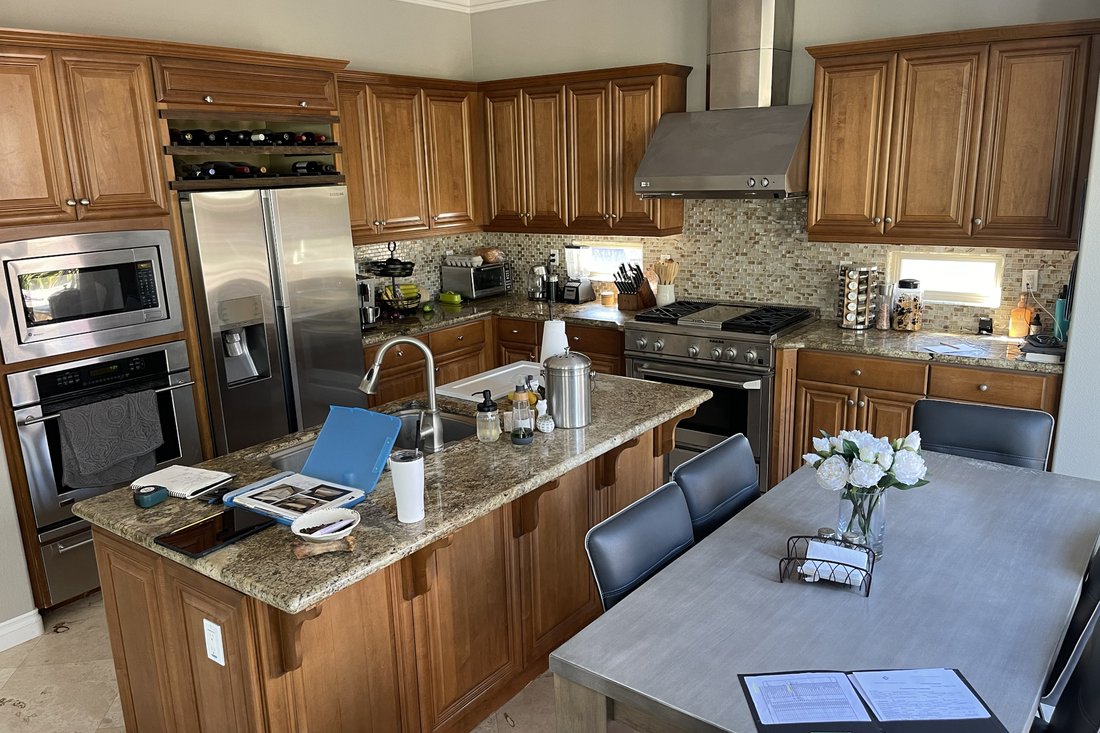
How Do You Prep for Painting Kitchen Cabinets When You've Hired Pros?
You handle access and the crew handles the surfaces. The day before, the kitchen should be emptied out, cleared and ready to mask.
Here's the homeowner checklist, roughly in the order to do it:
- Empty every cabinet and drawer. Dishes, food, spices, cleaning supplies, junk-drawer contents, shelf liner too. Painters need to reach the inside of the face frames and the cabinet edges.
- Clear the countertops. Small appliances, knife blocks, utensil crocks, fruit bowls and décor all need a new home. The counters get covered to protect them.
- Clear the tops of the cabinets. Baskets, plants and decorative items up there are easy to forget.
- Take down nearby wall items. Clocks, art, calendars and anything mounted on the backsplash or the walls next to the cabinets.
- Pull out floor items. Trash cans, step stools, pet bowls and rugs.
- Make a clear path. The crew will carry doors and drawer fronts out, so leave a clean route from the kitchen to the door they'll use.
- Unplug and mark any items that stay. If the refrigerator or range stays in place, let the crew know about water lines or gas connections so they mask around them rather than move them.
Packing tip: use labeled boxes by cabinet zone (glasses, pantry, baking). Set aside a "survival box" with a few plates, cups, utensils and a pan so you're not digging through everything at dinnertime.
How Do You Clean Kitchen Cabinets Before Refinishing?
A simple wipe-down with warm water and a little dish soap, followed by a clean-water rinse and a dry towel, is all most homeowners need to do. It removes surface grime so the crew can see the real condition of the wood.
Professional painters still degrease every surface themselves before sanding, because kitchen grease is invisible and paint won't stick to it. Paint manufacturers are specific about this. Benjamin Moore's data sheet for ADVANCE, a common cabinet enamel, says surfaces must be clean and "free of dirt, dust, grease, oil, soap, wax" before painting.
What to do, and what to avoid:
- Do focus on the cabinets nearest the range, hood and trash, where grease and hand oils build up.
- Do rinse well. Soap left on the surface is itself a contaminant.
- Don't use furniture polish, wax, or oil-based wood soaps in the weeks before painting. They leave a film that can cause adhesion problems.
- Don't scrub with harsh chemicals or abrasive pads. The crew will degrease and sand with the right products.
- Don't try to sand or prime yourself unless your painter has asked you to; uneven DIY prep can mean extra work to correct.
If the cabinets have water damage under the sink, soft spots or swollen panels, point them out before the job starts. Paint will not fix a structural problem, and a leak should be repaired by the right trade first.
What Does the Painting Crew Handle?
The surface work that makes the finish last belongs to the crew. On our cabinet painting projects, that includes:
- Labeling and removal. Every door and drawer front is numbered to its opening, then taken off with its hinges and hardware.
- Containment and masking. Counters, appliances, floors and walls are covered so overspray stays where it belongs.
- Degreasing, sanding and bonding primer. This is where adhesion is won or lost. Our post on why fresh paint peels off cabinets shows what happens when it is skipped.
- Spraying. Doors and drawer fronts are sprayed in a controlled area away from the kitchen, and the cabinet boxes are sprayed in place behind containment, which is what gives a smooth, factory-like finish.
- Reinstallation. Hinges and hardware go back on and get adjusted so doors close evenly.
Ask your painter one question before the start date: do they want you to remove the hardware, or will they? Many crews, ours included, prefer to do it so every screw stays with its door.
If you've read DIY guides on cabinet painting prep, the professional sequence is the same one they describe: remove and label doors and hardware, mask the kitchen, clean and degrease, fill dents and any old hardware holes you won't reuse, scuff-sand to dull the existing finish (the goal is a surface the primer can grip, not bare wood), remove the dust, then prime. What differs is the equipment, the products and the time it takes to do every face frame and edge properly.
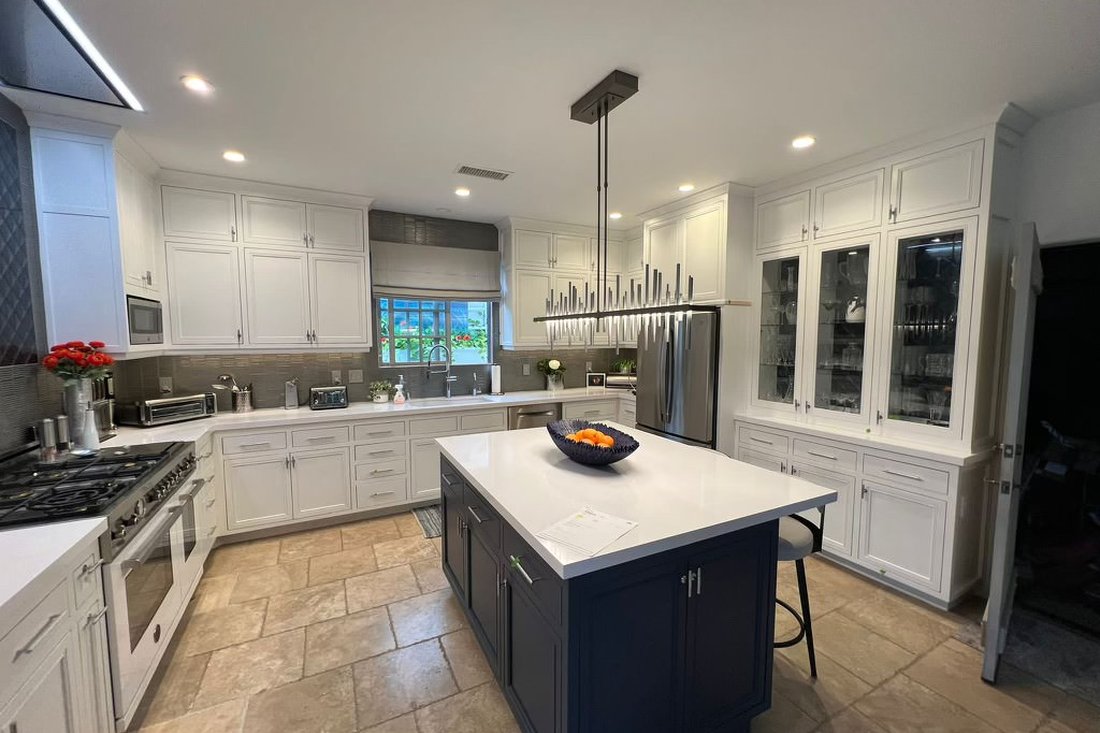
How Do You Live Without Your Kitchen During Cabinet Painting?
Most kitchens are only partly out of service, and for a short time. Our cabinet projects typically take three to five days, and you can use the kitchen for much of that, since you lose the doors, not the room.
A few things make the week easier:
- Set up a temporary station. A folding table in the dining room with the coffee maker, microwave and a dish bin covers breakfast and simple dinners.
- Plan easy meals. Grilling, slow-cooker meals and takeout keep you away from the masked-off counters.
- Keep pets and kids out. Freshly sprayed surfaces pick up fur and fingerprints. Close off the kitchen or set a gate.
- Ventilate. Waterborne cabinet enamels have far less odor than older solvent lacquers, but open windows and run the hood fan when the crew says it's okay.
- Mind the weather. Many enamels list a minimum application temperature (50°F for the ADVANCE example above). That's rarely a problem in San Diego, but on hot, dry Santa Ana days, keep windows and A/C settings as your painter suggests so the finish levels properly.
What Should You Decide Before the Painters Arrive?
Make the design choices early so nothing stalls on day one. Changing colors after primer goes on can add time and cost.
Have these settled:
- Color. Look at samples in your own kitchen light, morning and evening. If you are torn, a color consultation can help; here's what a color consultant does, and Lifetime offers a free color consultation.
- Sheen. Satin and semi-gloss are the usual choices. Our guide on choosing the right paint finish for kitchen cabinets compares them.
- Hardware. Reusing your pulls, or switching? If new hardware has a different hole spacing, tell the painter now so old holes can be filled before spraying.
- Islands and two-tone. Decide whether the island, uppers and lowers are one color or different.
- Inside the boxes. Painting cabinet interiors is usually a separate scope, so discuss it up front if you want it.
Older homes need one more check. If your house was built before 1978, sanding original cabinetry can disturb lead paint, so the crew must follow the EPA's lead-safe work rules. Our crews are EPA Lead-Safe Certified, and that matters more in a kitchen than almost anywhere else in the house.
How Long Should You Wait to Use Painted Cabinets?
Cabinets are usually usable the same evening for light use, but the finish keeps hardening for weeks. Treat doors gently for the first week or two.
Benjamin Moore's ADVANCE data sheet, for example, lists four to six hours to dry to the touch, recommends no heavy abrasion and no returning shelves to service for at least five to seven days, and notes the finish can take up to 30 days to reach full hardness. In practice:
- Put dishes back after the crew gives the okay, and set them down rather than sliding them.
- Close doors softly and avoid hanging towels on painted doors for a couple of weeks.
- Clean with a soft damp cloth only, and wait a few weeks before using any cleaner stronger than mild soap.
Frequently Asked Questions
Do I need to remove cabinet doors before painters arrive?
Usually no. Most professional crews remove, label and reinstall doors, drawers and hardware themselves so everything goes back in the right place. Confirm with your painter before the start date.
Should I clean my cabinets before professional painters come?
A basic wipe-down with mild soap and water, then a clean-water rinse, is helpful. The crew will still degrease and sand every surface, so you don't need strong chemicals.
Can I use my kitchen while cabinets are being painted?
Yes, for most of the job. You lose access to the masked counters and the cabinet storage while the doors are off, so set up a temporary station for a few days.
How long does it take to paint kitchen cabinets?
Most kitchens take three to five days from removal to reinstallation. Larger kitchens, islands and two-tone designs can add time.
Is the smell from cabinet paint dangerous?
Modern waterborne cabinet enamels are much lower in odor and VOCs than older solvent finishes. Keep the room ventilated, and keep pets and young children out of the work area until the crew says it's ready.
Get Your Kitchen Ready the Easy Way
If you're planning cabinet painting, start with an on-site look at your doors, boxes and finish so you know exactly what prep is included before you empty a single drawer. Lifetime Custom Painting, a licensed San Diego painting contractor (CSLB #1002304), sprays cabinets for a factory-smooth finish backed by a 2-year warranty, with typical kitchens running $3,000–$9,000. Book a free estimate or call (619) 591-9936.
Thinking about a project in San Diego?
Luis Rodriguez and the team give free, fixed written estimates — no pressure, no obligation.
- Licensed & insured
- 4.9★ · 291+ reviews
- 10% military discount